A Turning Point: How the “Poruch” NGO and Acted Restored Heat and Resilience to Communities in the Mykolaiv Region
The fighting left deep scars on the residential and energy infrastructure of the Mykolaiv region. In the region’s rural communities—Voskresenska, Vesnyanska, and Shevchenkivska—residents found themselves in extremely difficult conditions: widespread destruction of homes, a lack of gas and centralized heating, and a loss of income created a real threat of depopulation
7/10/20263 min read
The strategic response to this challenge was the project “Providing Multisectoral Humanitarian Assistance to Populations Affected by the Conflict in Ukraine,” implemented by the All-Ukrainian Public Organization “Poruch” in partnership with the international organization Acted from November 30, 2023, to August 15, 2024. The main goal of the initiative was not simply to provide emergency aid, but to restore the long-term resilience of affected families.
Housing Reconstruction: An Inclusive Approach and the “Domino Effect”
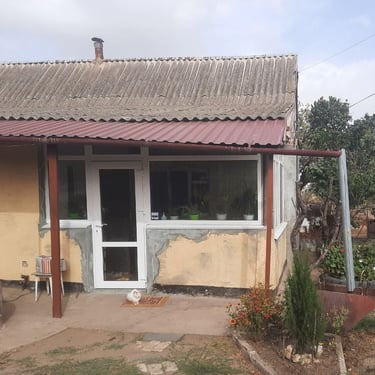
The restoration of damaged homes was the first and most critical step in stabilizing communities. Thanks to the project, 43 households (18 apartments and 25 private homes) received assistance, exceeding the initial plan by 35%. In total, 103 unique beneficiaries experienced significant improvements in their lives, including 41 people with disabilities.
The work was divided into two categories:
Minor repairs (86%): prompt replacement of damaged windows, double-pane windows, and doors.
Moderate repairs (14%): major work to restore roof structures.
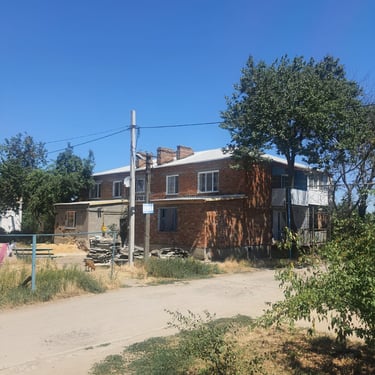
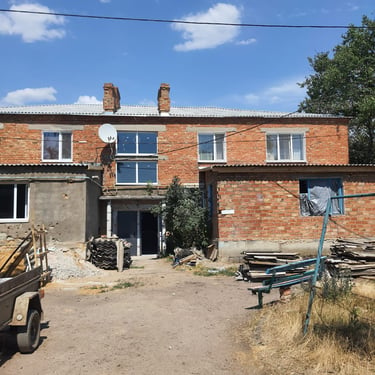
Strategic project case study: In the village of Horokhivka (5 and 6 Myru St.), the roofs of two apartment buildings were completely renovated, improving living conditions for 44 people. This triggered an important “domino effect”: eliminating leaks and mold restored the buildings to habitable condition, allowing residents to officially apply for further government assistance for reconstruction. Thus, humanitarian aid served as a catalyst for long-term recovery.
Energy Autonomy: Heat That Ensures Survival
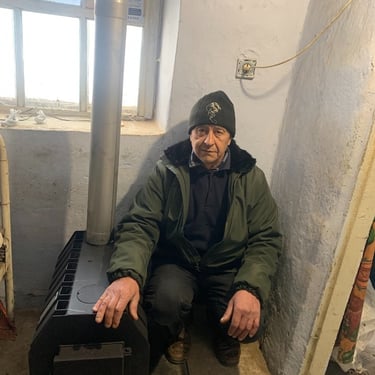
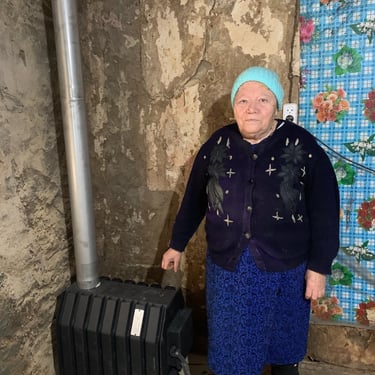
With the utility networks destroyed, switching to solid-fuel heating became the only way to ensure independence from vulnerable infrastructure. The project offered a comprehensive and durable technical solution:
Reliable stoves: The installed units are made of special 4-mm-thick heat-resistant steel (typically used in locomotive manufacturing), ensuring years of reliable operation. They are compact, feature a cooking surface for preparing meals, and can run on firewood, coal, or pellets.
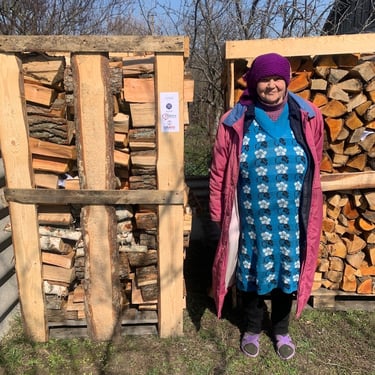
Fuel Supply: The logistics team delivered 336 m³ of firewood to the beneficiaries. Flexible budget management made it possible to provide fuel to 84 households—28 more families than originally planned. Of these, 56 families received a complete set (stove + 4 m³ of firewood), while another 28 families received solid fuel to meet their critical needs.
The Human Dimension: How Aid Changes Lives
The true effectiveness of humanitarian intervention is measured not only in cubic meters or square meters, but in the preservation of the dignity and vitality of specific individuals.
Valentina (village of Mykhailo-Laryne): cares for her elderly mother with a disability. The free stove and supply of firewood lifted a huge financial burden from the family, allowing them to redirect their limited funds toward essential medications and care supplies.
Olga (Chumaky village): Thanks to the cooktop on her new stove, she’s been able to save significantly on the cost of expensive bottled gas.
Serhiy (village of Myrne): His house sustained significant damage during the shelling. The materials and repairs he received became his “foothold,” allowing him to start rebuilding his life from scratch.
Challenges, Lessons, and a Look to the Future
The project was implemented amid a difficult economic and social situation, which forced the team to seek unconventional management solutions:
Labor shortage: Due to mobilization and evacuation, the region’s construction industry is facing an acute shortage of skilled workers. The key lesson for the future is the implementation of rapid mentorship programs, where young assistants learn directly on the job alongside experienced professionals.
Economic volatility: Market prices for construction materials have risen by more than 20%. However, thanks to transparent and efficient bidding procedures, the NGO “Poruch” managed to keep the increase in the final cost of work for the project at just 10%.
Exit Strategy: A Shift Toward “Green” Energy
The experience of the large-scale blackouts in 2023–2024 has shown that the next logical step should be a transition to sustainable and renewable energy sources. Leveraging the natural potential of southern Ukraine, which enjoys approximately 300 sunny days per year, the NGO “Poruch” plans to scale up its efforts to implement solar energy and uninterruptible power supply systems for critical infrastructure—primarily rural schools and hospitals.
Conclusion
The project’s main success lies in transforming communities in the Mykolaiv region from passive recipients of aid into resilient entities capable of providing for themselves. Renovated housing and autonomous heating have given people what matters most—the means to transition from a survival mode to a confident and sustainable recovery.
Project report (slides) could be accessed via this link.