English from Heart to Mind
Information about a network of speaking clubs within Peace Schools initiated by the NGO “Poruch” that unites Ukrainian youth across the country and English-speaking volunteers who are willing to help our students to improve their English skills as well as extend their horizons
3/20/20263 min read
The name “English from Heart to Mind” perfectly suits this initiative, which I am going to prove in this article based on an interview with the coordinator of the clubs, a Swedish volunteer, Peter Langerback, and my personal experience as an intern who has been involved in the project.
It all began with a wish to make a contribution. Peter shared that after the start of the full-scale invasion he was desperate to help Ukraine somehow, and so an acquaintance with Mariia Tyshchenko, the executive director of “Poruch,” who presented him with a chance to lead speech clubs for Ukrainian students, became the outlet for his commitment to supporting Ukraine through education. As he says: “As I’m too old for the trenches, I’ve changed the gun to the pen.”
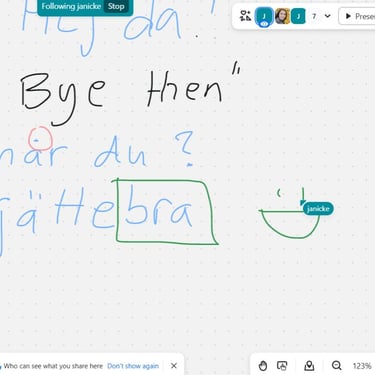
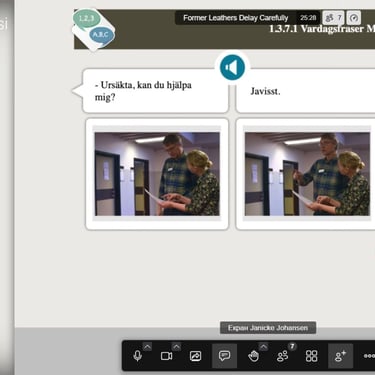
Language, after all, travels. It opens opportunities, careers, and networks. But it also builds confidence, allowing a young person to articulate their inner self. Peter describes his role as creating conditions in which others can act — to open doors, connect people, and ensure that the structure holds. The main idea is to provide a safe environment for Ukrainian youth where they can freely share their thoughts and expand their worldviews. The topics of the discussions may vary considerably: movies, cuisine, national holidays, the impact of war, democracy, literature, and much more. There are also some exciting initiatives, as for example conducting a combined speech club with Lutsk and Poltava schools, where students had to guess where their colleagues were from. Such an inter-Ukrainian exchange fosters friendships and enables learning about other parts of Ukraine.
But of course, given the conditions Ukrainians are living in now, some challenges do arise. For instance, when an air raid alarm interrupts a session, Ukrainian students naturally must leave immediately for shelter. On one occasion, Knut Persson, a volunteer from Malmö, remained alone on the call, suddenly confronted with the emotional weight of war from afar and a feeling of helplessness. At the next meeting, he asked the students how they felt. One answered simply: “I am scared.” But it is an open space, so discussions about anxiety and despair that Ukrainian students experience due to the war, regular air alarms, and power outages take place. And the fact that such projects continue functioning despite all the obstacles only highlights the resilience and strong spirit of the Ukrainian people.
Peter also shared his experience of listening to a presentation from students from Poltava about how the war has changed their lives. He says: “And if you read the words that they are using, they are so carefully chosen. And they also, even if they are so young, are talking about coping strategies. First of all, admitting fear, changing views, learning new skills, and sustaining their own survival while adjusting, building preparedness, managing fear and staying calm. And as an adult, I have to say this is not what childhood was meant to be about. This is a disaster for a child — to forget how to play games and learn how to survive war. This also is when I see it, it becomes my responsibility. How am I going to handle that responsibility? I cannot save the children of the world. I can only save one at a time.”
Today, the network has expanded to more than 15 institutions, involving twenty volunteers from different countries and backgrounds. The growth astonishes even its coordinators. The initiative challenges traditional approaches to learning a foreign language with its open discussions, flexibility, and a variety of topics, exposing Ukrainian students to different multicultural methods of teaching.
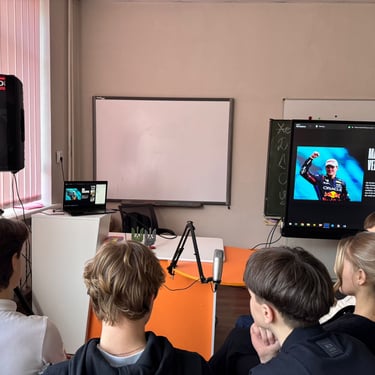
I had an opportunity to be part of a few conferences, and it was a pleasure watching students open up and speak English with sparkling eyes. Friendliness, mutual care, and regard prevail between the participants not only during a class but also in the working chats. Peter himself mentioned the following about his first impression of working with Lutsk Lyceum: “I was amazed by the involvement, the preparedness to speak, and the good English that the students had.” He gave special credit to the teacher from the Lyceum who facilitates every meeting – Andriy Gurskiy, calling him a real professional and one of the wisest, most ethically working teachers he has met. By the way, the name of the initiative “English from Heart to Mind” was suggested by none other than Andriy, who understood instinctively what the clubs were meant to offer: not just vocabulary and grammar, but communication shaped by empathy and mutual respect without authority.
The initiative “English from Heart to Mind” emerged through trust, volunteering, and the willingness to act without waiting for perfect conditions. It has been a real pleasure for me during my internship to observe these speaking clubs flourishing and fostering a platform for students to speak up, engage, grow, and enhance their English competences, while also giving them lifelong tools to shape their own destiny by becoming self-aware adults and ambassadors of peace. In times when human rights norms appear fragile and institutions strained, such spaces represent a quiet, durable form of resistance — one built not with weapons, but with words spoken from heart to mind.
The NGO “Poruch” expresses immense gratitude to every volunteer involved in this network for all their hard work and contribution to the well-being of our youth!